
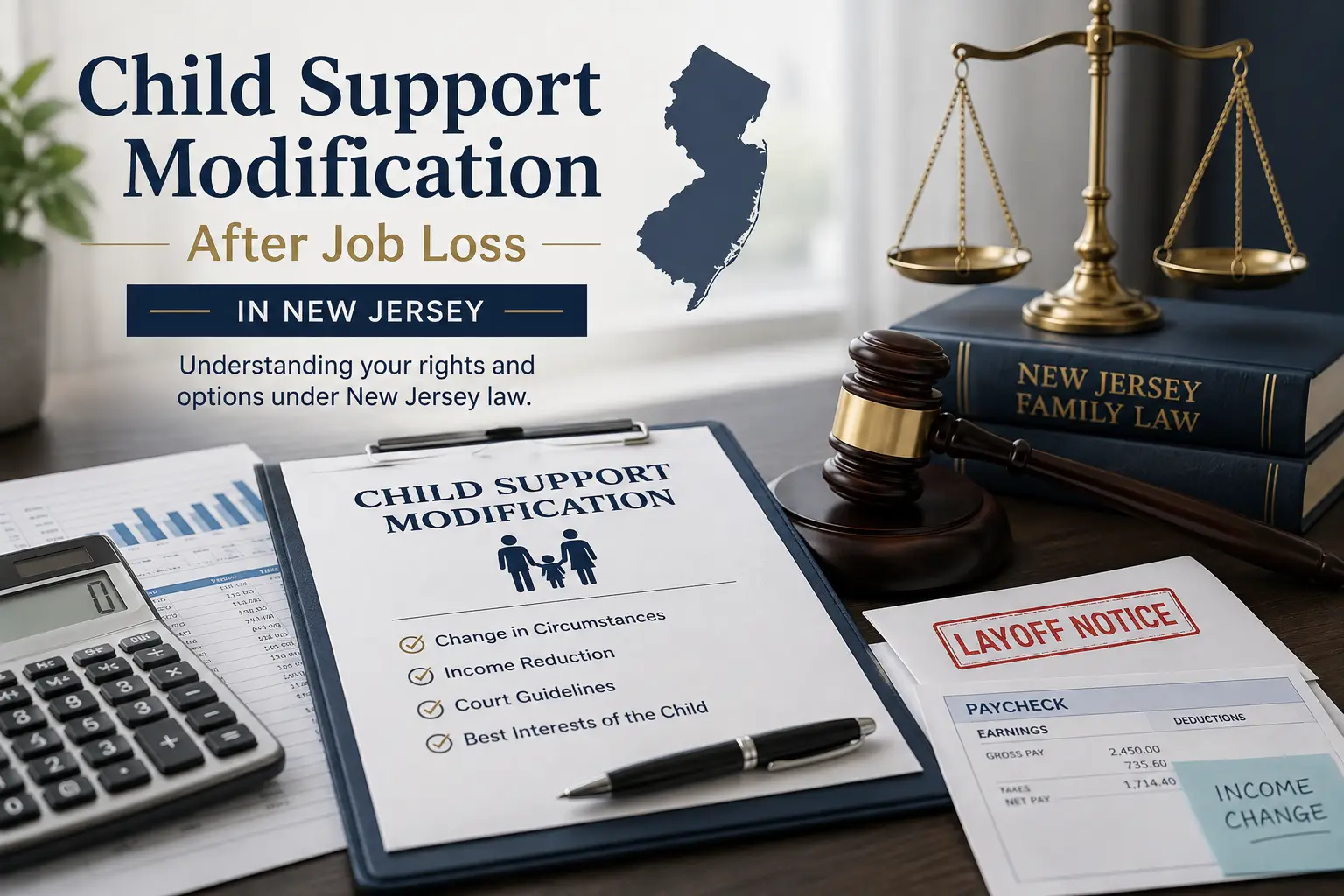
Can I Modify Support if I Lose My Job in NJ?
|By Herbert & Weiss
Child support modification after job loss in New Jersey
Losing a job is an incredibly stressful experience. If you are also responsible for child or spousal support payments in New Jersey, that stress can quickly turn into panic. You might wonder if your financial obligations drop automatically when your income does.The short answer is no—your support obligation does not change on its own, nor can you unilaterally modify the payment on your own. However, New Jersey law does provide a legal pathway to modify your support obligations if your job loss meets specific legal criteria. If you are considering a child support modification after job loss in New Jersey, it is important to understand that a change in income does not automatically change an existing support obligation. This remains true whether your obligation is court ordered, paid directly to the other party, or through probation.Following is an overview regarding navigating New Jersey’s child support modification laws during a time of your unemployment.Rule #1: Do Not Unilaterally Stop or Reduce Support Payments
The most critical rule in New Jersey family law is to never unilaterally stop or reduce your child or spousal support payments. Notably:- Arrears Accumulate: Without first obtaining a court order, and should you decide to stop paying your child support obligation, all missed or reduced payments will accumulate as support debt (arrears).
- No Automatic Retroactive Relief: Under New Jersey law, judges generally cannot assume that support debt that accumulated before a motion was filed will be reduced or eliminated. The timing of an application is critical when seeking a child support modification after job loss.
- Enforcement Penalties: Unapproved reductions, pauses or stoppage in your child support obligation may result in additional enforcement measures, and if you are paying through probation, these measures may include the court filing an order to suspend your driver’s license, passport denial, asset liens, and/or credit reporting consequences.
- Was the Job Loss Voluntary or Involuntary?
- Potentially Qualifying: Downsizing, corporate layoffs, company closures, or a medical condition rendering you permanently unable to work.
- Potentially Not Qualifying: Quitting your job, intentionally reducing your hours, or other circumstances in which the court determines that the loss or reduction in income was voluntary or that income should be imputed.
- Is the Change Permanent or Long-Term?
- Have You Made a Diligent Effort to Find Work?
Specific Rules for Alimony vs. Child Support
While both look at “changed circumstances,” there are distinct legislative rules for each in New Jersey.- Alimony (Spousal Support): Under New Jersey’s amended alimony statute, N.J.S.A. 2A:34-23(k), a non-self-employed individual seeking to modify alimony based upon an involuntary loss of employment generally must wait 90 days from the date of involuntary loss of employment before filing an application with the Court. Once filed, the court may, in its discretion, make relief retroactive to the date of the loss of employment or reduction in income. Despite all your efforts, if you suspect you still may not be employed within that time period, it is critical to meet with your attorney before expiration of the 90 days.
- Child Support: Unlike alimony, there is no waiting period to file for a child support modification after job loss in New Jersey. However, courts still consider whether the unemployment constitutes a substantial and continuing change in circumstances and whether the party seeking modification has made reasonable efforts to obtain employment. If approved, child support may be recalculated under the applicable New Jersey Child Support Guidelines based on the parties’ current financial circumstances.
Evidence and Supporting Documents You are required to Provide to the Court
To file a formal modification motion, you must back up your claims with appropriate and necessary evidence. Examples of documentation include:- A termination letter or layoff notice from your previous employer.
- Unemployment Insurance benefits.
- Your previously filed Case Information Statement.
- An updated New Jersey Case Information Statement (CIS) detailing your current income, assets, expenses, and debts.
- An active, dated job search log showing submitted applications, resumes, interviews, and other efforts to obtain employment.
- Other financial documentation relevant to the requested modification.
Act Quickly to Protect Yourself
Because New Jersey law places restrictions on retroactive modification of support, timing can be important. Delaying your application may leave you legally responsible for the existing support obligation while your request is pending.If you have experienced an involuntary layoff, gather your termination paperwork and consult an experienced New Jersey family law attorney promptly. An attorney can evaluate whether your circumstances may support a child support modification after job loss in New Jersey or an alimony modification after job loss, and can help you file the appropriate application and protect your financial interests.Categories:- Family Law
- Modifications